
Walking through the gates of a Renaissance faire for the first time can feel a little intimidating if you show up in jeans and a t-shirt while everyone around you is decked out in tunics, cloaks, and leather boots. The good news is that putting together a great ren faire outfit for men doesn’t require a costume degree or a bottomless budget. With a handful of the right pieces, layered thoughtfully, you can look like you stepped straight out of a medieval market square — whether you’re going for a humble peasant, a battle-worn knight, a roguish pirate, or a mysterious sorcerer.
This guide breaks down everything you need to know: the core building blocks of a men’s ren faire costume, character archetypes to draw inspiration from, how to shop smart (DIY vs. buying), sizing tips for bigger and taller guys, and the accessories that take an outfit from “costume” to “character.”

Why Your Ren Faire Outfit Matters
A Renaissance faire isn’t just a place to buy turkey legs and watch jousting — it’s an immersive world, and your clothing is your entry ticket into it. The way people dressed during the Renaissance said a lot about who they were: a farmer’s rough-spun tunic looked nothing like a nobleman’s velvet doublet, and a sea captain’s coat told a different story than a blacksmith’s leather apron. That same principle applies to your costume today. The outfit you choose sets the character you’ll play for the day, and it shapes how other faire-goers and performers interact with you.
Beyond the fun factor, comfort matters just as much as style. Faires are typically outdoors, involve a lot of walking on uneven ground, and can stretch across several hours in the sun. That means breathable fabrics, broken-in boots, and layers you can adjust matter just as much as how authentic your look appears in photos.
Building Blocks of a Men’s Ren Faire Costume
Almost every great ren faire outfit for men is built from the same core layers. Once you understand these pieces, you can mix and match them into dozens of different character looks.
The Shirt (Chemise)
The foundation of nearly any Renaissance-inspired outfit is a loose, billowy shirt, often called a chemise. Look for cotton or linen with wide sleeves, a laced or buttoned neckline, and a relaxed fit. This piece alone, tucked into trousers with a simple belt, can carry a casual “villager” look.
The Vest, Jerkin, or Doublet
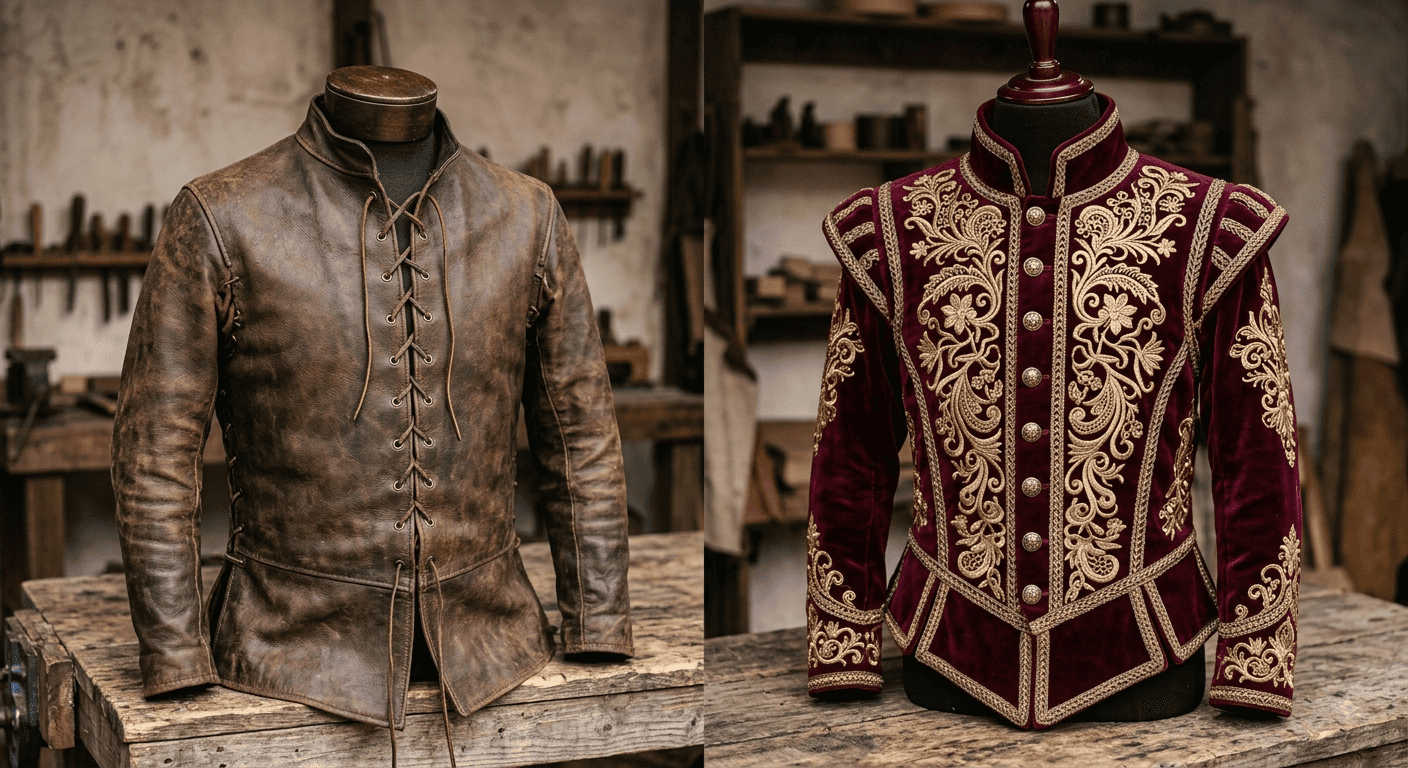
Layered over the shirt, a vest (sometimes called a jerkin) adds structure and visual interest. Leather or suede vests suit rugged characters like hunters, blacksmiths, or pirates, while a fitted doublet with brocade or embroidery leans more toward nobility or merchant-class characters.
Trousers or Breeches
Loose-fitting trousers, often gathered or tied at the ankle, are the most versatile option and pair well with almost any top. Breeches — shorter, fitted pants worn with tall boots or stockings — lean more formal and are popular for noble or courtly looks.
Boots
Footwear can make or break the illusion. Knee-high leather boots are the most popular choice because they work across nearly every character type, from knight to pirate to ranger. If leather boots aren’t in the budget, a simple brown or black boot with minimal modern branding will do the job.
Cloaks, Capes, and Outerwear
A cloak instantly elevates a basic outfit and adds drama, especially for cooler weather or evening events. Hooded cloaks work well for mysterious characters like wizards, rangers, or rogues.
Belts and Sashes
A wide leather belt isn’t just functional (great for hanging pouches or a costume sword) — it also cinches loose layers together and adds a strong visual anchor to the outfit.
Popular Ren Faire Character Styles for Men
One of the most fun parts of building a costume is deciding who you want to be for the day. Here are some of the most popular directions.
The Peasant or Villager
This is the easiest and most budget-friendly entry point. A linen shirt, simple trousers, a leather vest, and boots create an authentic, comfortable look that’s perfect for first-timers.
The Knight or Squire
For a more heroic look, layer a padded gambeson or vest over your shirt, add a wide belt, and top it off with faux armor pieces like vambraces (arm guards) or a breastplate. Even without full metal armor, a few accent pieces can sell the fantasy.
[Image suggestion: A man dressed as a squire/knight character wearing a gambeson-style vest, arm bracers, and a belt with a costume sword, ideally photographed at an actual faire for authenticity.]
The Pirate
Pirate looks are a ren faire favorite because they’re forgiving and dramatic. Think billowy shirts, a long coat, a tricorn hat, a sash, and tall boots. Weathered, distressed fabrics only add to the effect.
The Rogue or Ranger
Leaning into earth tones — greens, browns, and grays — with a hooded cloak, fingerless gloves, and a bow or quiver prop creates a woodland, stealthy vibe.
The Nobleman or Merchant
For a dressier option, a fitted doublet in rich colors like burgundy or navy, paired with breeches, tall boots, and a decorative chain or medallion, signals wealth and status.
The Wizard or Scholar
Flowing robes, a wide belt, a satchel, and a wooden staff create an instantly recognizable magical or academic character with minimal effort.
DIY vs. Buying a Pre-Made Costume
There are two main paths to building your outfit, and the right one depends on your budget, timeline, and how deep you want to go into the hobby.
DIY assembly means piecing together individual items — a shirt here, a vest there, boots from a different source — often shopping secondhand or repurposing modern clothing that has a “period-adjacent” look. This route tends to be more affordable and lets your outfit evolve over time, but it takes more research and patience to get pieces that work well together.
Pre-made costume sets bundle a shirt, pants, and sometimes accessories into a single purchase. These are convenient for first-timers who want a complete look without hunting down individual pieces, and they’re widely available through costume retailers and online marketplaces. The trade-off is that pre-made sets can sometimes look more “costume-y” than pieces sourced individually, and quality varies significantly between sellers, so checking reviews and sizing charts closely is worth the extra few minutes.

Sizing Tips, Especially for Big and Tall Guys
Renaissance-style clothing is generally more forgiving than fitted modern clothing because of its loose, layered design — but sizing still trips a lot of people up. A few tips:
- Prioritize adjustable pieces. Lace-up vests, drawstring trousers, and belted tunics can flex with your body more than fixed-size garments.
- Check extended sizing options. Several specialty retailers now offer big and tall ranges specifically for Renaissance costuming, so don’t assume standard costume shops are your only option.
- Measure, don’t guess. Costume sizing often runs differently than everyday clothing brands, so check the seller’s actual measurement chart rather than relying on your usual size.
- Leave room to layer. If you plan to wear a shirt, vest, and cloak together, size your base layer with enough room to move comfortably underneath the others.
Accessories That Complete the Look
The right accessories are often what separates a good ren faire outfit from a great one.
- Pouches and satchels worn on the belt add practicality (a place for your phone and wallet) and authenticity.
- Hats — floppy bard hats, tricorns, or simple caps — frame the whole outfit and instantly reinforce your character.
- Jewelry and medallions work well for noble or merchant characters.
- Costume weapons like a sheathed sword or dagger (check your specific faire’s prop policy first) add drama for knight, pirate, or rogue looks.
- Gloves, particularly fingerless leather ones, suit rogue, ranger, or working-class characters.

Final Thoughts
The best ren faire outfit for men isn’t necessarily the most expensive or the most historically precise — it’s the one that lets you move comfortably through a full day of festivities while feeling like the character you set out to be. Start with the core layers (shirt, vest, trousers, boots), pick a character direction that excites you, and build outward from there with cloaks, belts, and accessories. Whether you assemble your look piece by piece over several trips to the faire or grab a complete set for your first outing, the goal is the same: walk through those gates looking — and feeling — like you belong.