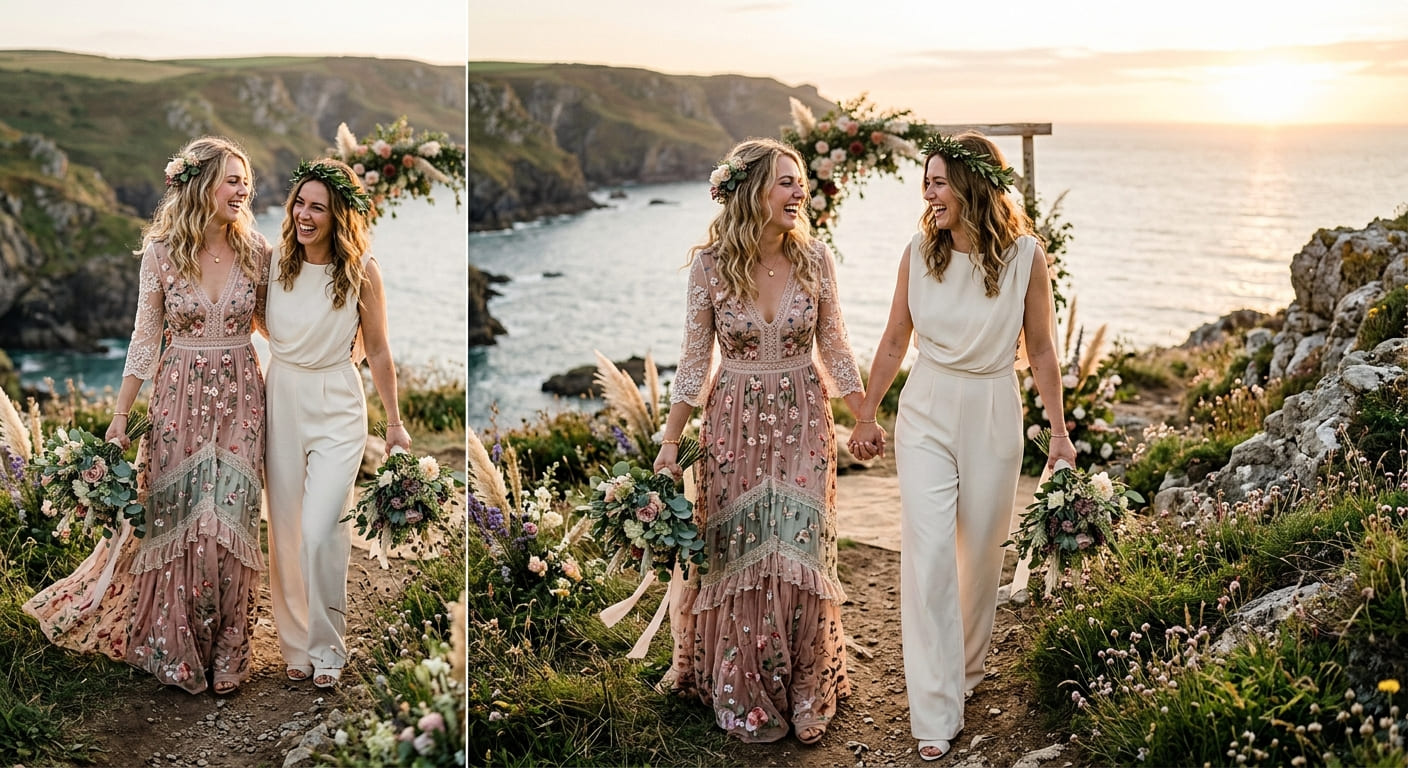
For generations, “wedding dress” meant one thing: a floor-length, ivory or white gown with a fitted bodice, a full skirt, and a veil trailing behind it. That image still sells plenty of gowns every year — but it’s no longer the only story brides are telling on their wedding day.
A growing number of brides are walking down the aisle in color, in separates, in vintage finds, and in silhouettes that would have raised eyebrows a decade ago. If you’re one of them, you’re not “doing it wrong.” You’re part of one of the biggest shifts bridal fashion has seen in years.
This guide breaks down what a non-traditional wedding dress actually is, why so many brides are choosing one, and the specific styles worth considering — from colored gowns to jumpsuits to dresses you can genuinely wear again.
What Counts as a Non-Traditional Wedding Dress?
A non-traditional wedding dress is any bridal look that steps outside the conventions most people picture when they hear “wedding gown.” That could mean the color isn’t white or ivory. It could mean the silhouette isn’t a ballgown or a mermaid cut. It could mean the outfit isn’t a single dress at all.
In practice, “non-traditional” is a wide umbrella. It covers everything from a black wedding gown to a tailored pantsuit to a short slip dress worn with sneakers. What ties these looks together isn’t a specific style — it’s the decision to prioritize personal taste, comfort, or practicality over bridal convention.
It’s worth noting that non-traditional doesn’t mean “less bridal.” Many of these dresses are just as formal, detailed, and considered as a classic gown. They simply reject the idea that there’s only one correct template for a bride to follow.
Why More Brides Are Choosing Non-Traditional Styles
A few forces are driving this shift:
- Second and third weddings. Many brides marrying again want something that feels personal rather than a repeat of a look they’ve already worn.
- Destination and casual weddings. A beach ceremony or backyard celebration often calls for something lighter and less formal than a traditional ballgown.
- A desire for re-wearability. Brides increasingly want an outfit they can wear again — to another event, a vow renewal, or even just a nice dinner — rather than something that lives in a garment bag forever.
- Cultural and personal identity. Some brides are blending cultural dress traditions with Western bridal style, or simply wearing a color that means something to them.
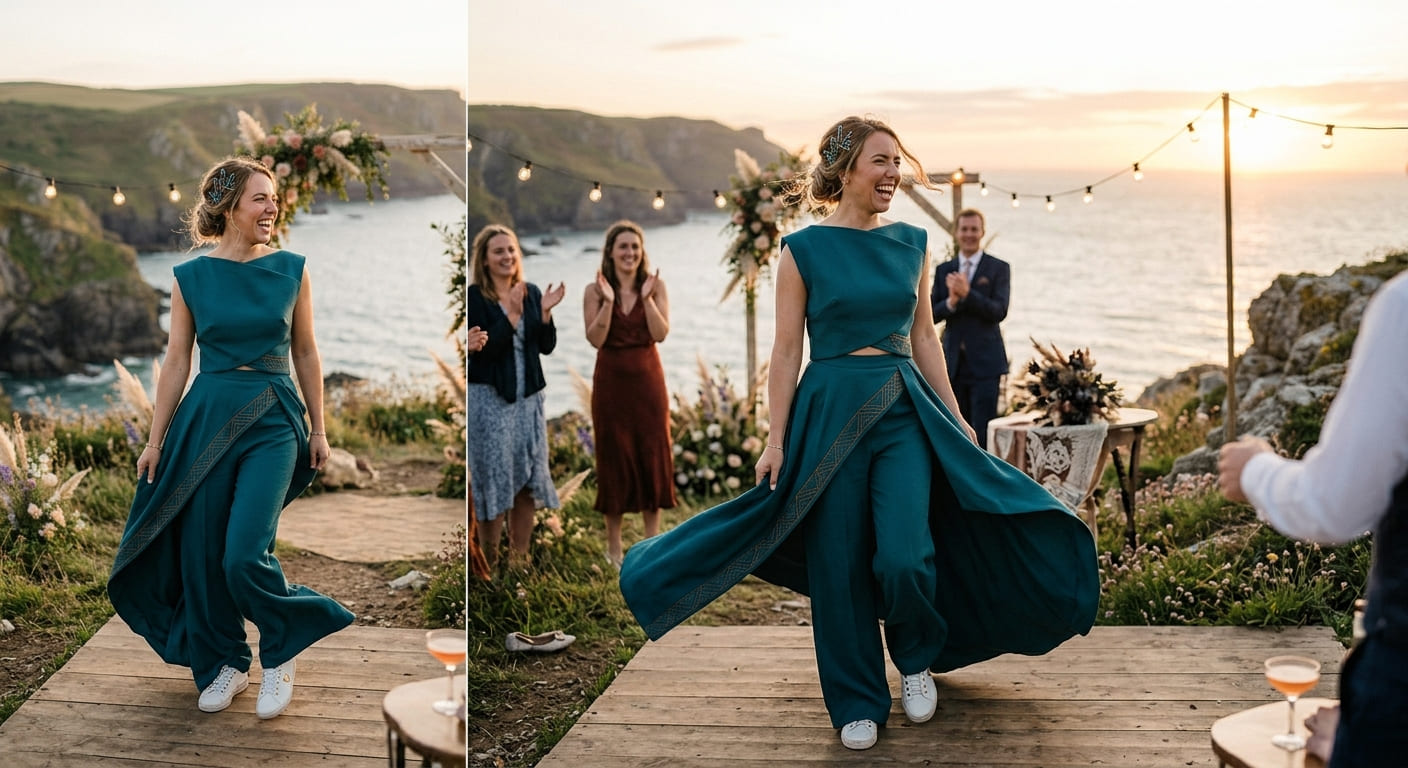
- Comfort. Heavy trains, boning, and layers of tulle aren’t for everyone, and jumpsuits or separates let brides dance and move freely.
None of these reasons cancel out sentiment or elegance. They just widen what “bridal” is allowed to look like.
Popular Types of Non-Traditional Wedding Dresses
1. Colored Wedding Gowns
Color is one of the most visible ways brides are breaking from tradition. Black wedding dresses have become especially popular for fall and evening weddings, offering a dramatic, editorial look. Blush, sage green, dusty blue, and deep red are also common choices, often used as accent tones through embroidery, lining, or sash details rather than the entire gown.
A colored gown doesn’t have to feel like a costume. Many designers now offer the same silhouettes found in traditional bridal collections — A-line, fit-and-flare, ballgown — simply rendered in a different palette. That makes it easy to keep the formality of a “real” wedding dress while making a clear style statement.
2. Bridal Jumpsuits and Pantsuits
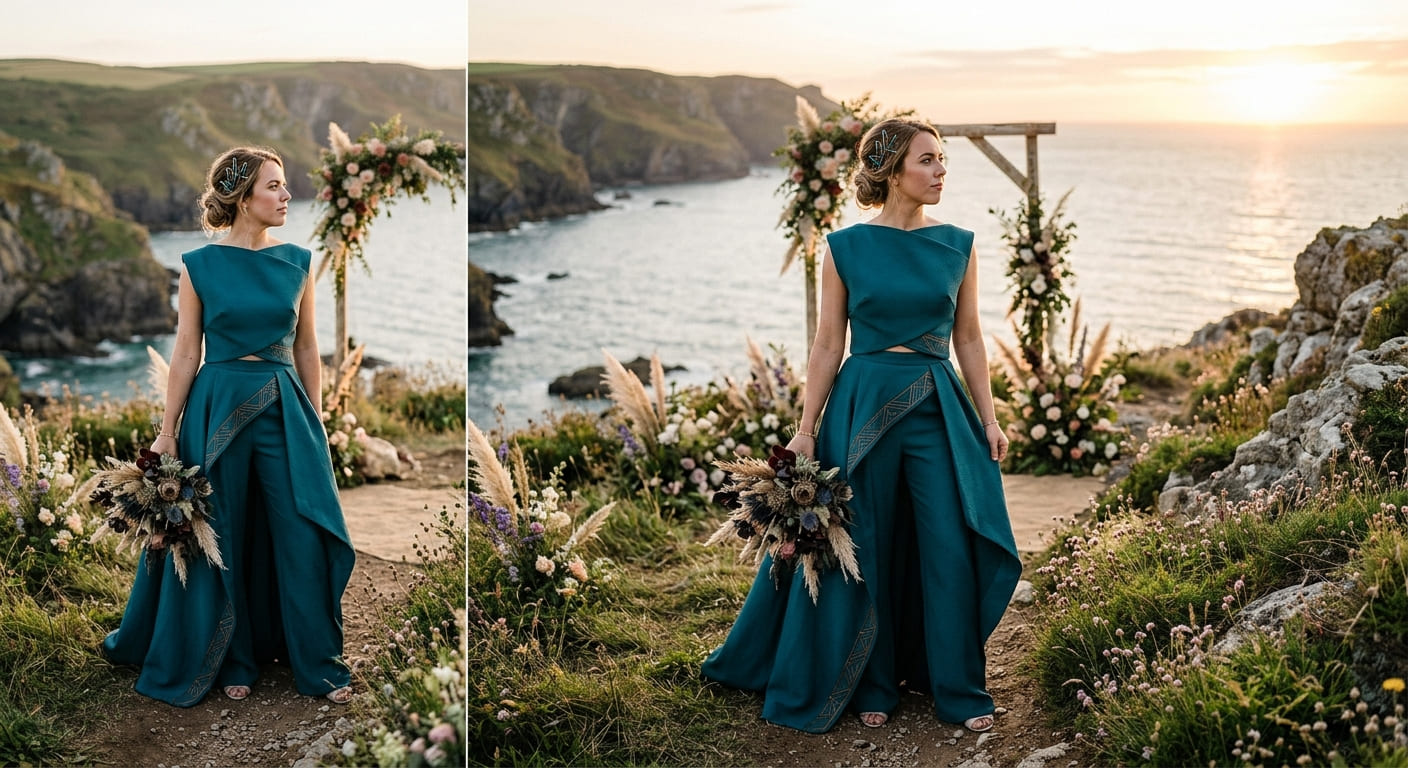
The bridal jumpsuit has moved from niche to mainstream over the past several years. Wide-leg, tailored, or wrap-style jumpsuits offer the same formality as a gown with far more ease of movement — no bustle, no train to manage, no worrying about tripping on a hem while dancing.
Pantsuits follow a similar logic. A well-tailored bridal pantsuit, often in ivory, white, or a soft neutral, reads as polished and modern rather than casual, and it’s an especially popular choice for courthouse weddings, elopements, or second ceremonies.
3. Two-Piece Bridal Sets
Two-piece outfits — a fitted top or bodysuit paired with a skirt — give brides flexibility that a single gown doesn’t. Some brides wear the full look for the ceremony and then remove the skirt for a shorter, dance-floor-friendly silhouette during the reception. This “convertible” approach has become one of the most practical trends in modern bridal fashion, letting a bride get two distinct looks out of one outfit.
4. Minimalist and Slip-Style Dresses
Not every non-traditional dress is bold. Minimalist bridal fashion — think bias-cut slip dresses, simple sheath silhouettes, and clean lines with little to no embellishment — has quietly become one of the most requested alternatives to a heavily beaded ballgown. These dresses tend to photograph beautifully, work well for warm-weather or intimate weddings, and are often more affordable than heavily constructed traditional gowns.
5. Tea-Length and Retro-Inspired Dresses
Tea-length dresses, which fall between the knee and ankle, borrow from 1950s bridal style and offer a vintage, playful alternative to a full-length gown. They’re a favorite for garden weddings, city hall ceremonies, and brides who want a dress that feels a little lighter — literally and figuratively — than a traditional silhouette.
6. Bohemian Wedding Dresses
Boho bridal style leans into flowing fabrics, relaxed silhouettes, lace detailing, and a free-spirited feel. It’s technically a subcategory of non-traditional dressing, but it’s become so popular that many brands now treat it as its own established category, especially for outdoor, rustic, or destination weddings.
7. Statement Sleeves, Necklines, and Details
Some brides keep a fairly classic silhouette but change the details: dramatic bishop sleeves, a plunging back, an asymmetrical hemline, or a high-low skirt. These choices let a bride keep a recognizably “bridal” shape while still making the dress unmistakably her own.
How to Choose the Right Non-Traditional Dress for You
With so many directions to go, it helps to narrow things down using a few practical questions:
- What’s the setting? A beach wedding calls for different fabric and length than a formal evening reception in a ballroom.
- How much are you moving? If dancing is a priority, a jumpsuit, two-piece, or shorter dress will serve you better than a heavy train.
- Do you want to wear it again? Slip dresses, tailored suits, and simpler silhouettes are far easier to re-wear than an elaborate ballgown.
- What’s your comfort level with color? You don’t have to commit to an all-black gown to go non-traditional — even a soft blush lining or colored sash counts.
- What’s your budget? Non-traditional doesn’t always mean cheaper, but simpler silhouettes and separates are often more affordable than heavily embellished traditional gowns.
There’s no wrong answer here. The point of a non-traditional dress is that it’s built around you, not around a template.
Where to Find Non-Traditional Wedding Dresses
Non-traditional bridal wear has grown enough that you no longer need a custom designer to find it. A few practical starting points:
- Independent and boutique bridal designers, many of whom specialize entirely in non-traditional, colored, or handmade gowns.
- Marketplaces like Etsy, which offer an enormous range of independent designers making everything from gothic black gowns to hand-embroidered colorful dresses.
- Mainstream bridal retailers, most of which now carry at least a small non-traditional or “alternative bridal” line alongside their classic collections.
- Consignment and vintage shops, especially useful for tea-length or retro-inspired pieces.
It’s worth trying on more than one category before deciding — a bride who assumes she wants a jumpsuit sometimes falls in love with a colored slip dress instead, and vice versa.
Final Thoughts
A wedding dress is supposed to make you feel like the best version of yourself on one of the most important days of your life — not like you’re wearing a costume borrowed from someone else’s idea of what a bride should look like. Whether that means a black gown, a tailored suit, a two-piece set, or a simple slip dress, the growing popularity of non-traditional wedding dresses reflects a simple idea: there’s more than one right way to get married, and there’s more than one right way to dress for it.
If you’re planning your own wedding, give yourself permission to try on styles you didn’t think you’d like. The dress that ends up feeling most “you” is rarely the one everyone expects.