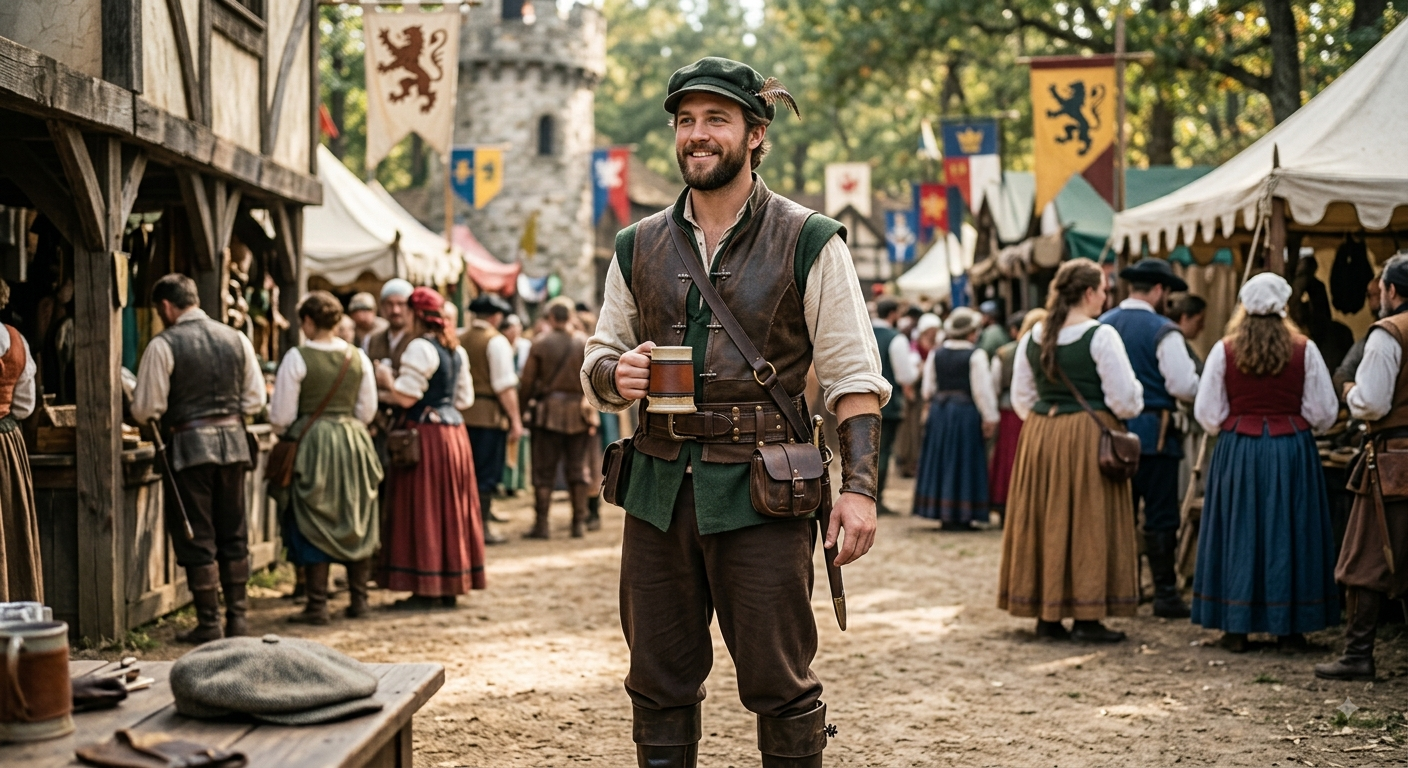
Renaissance faire season has a way of sneaking up on you. One minute you’re scrolling through photos of last year’s event, the next you’re standing in your closet three days before opening weekend wondering how on earth you’re going to put together an outfit that doesn’t look like a last-minute Halloween costume. The good news is that a great men’s ren faire outfit doesn’t require a tailor, a trip to a costume shop, or a small fortune. It requires a plan.
This guide walks through everything you need to know about building a men’s Renaissance faire outfit from the ground up — the core pieces, the layering logic, the accessories that pull it all together, and budget-friendly ways to get there whether you’re going for historical accuracy, fantasy flair, or something comfortably in between.
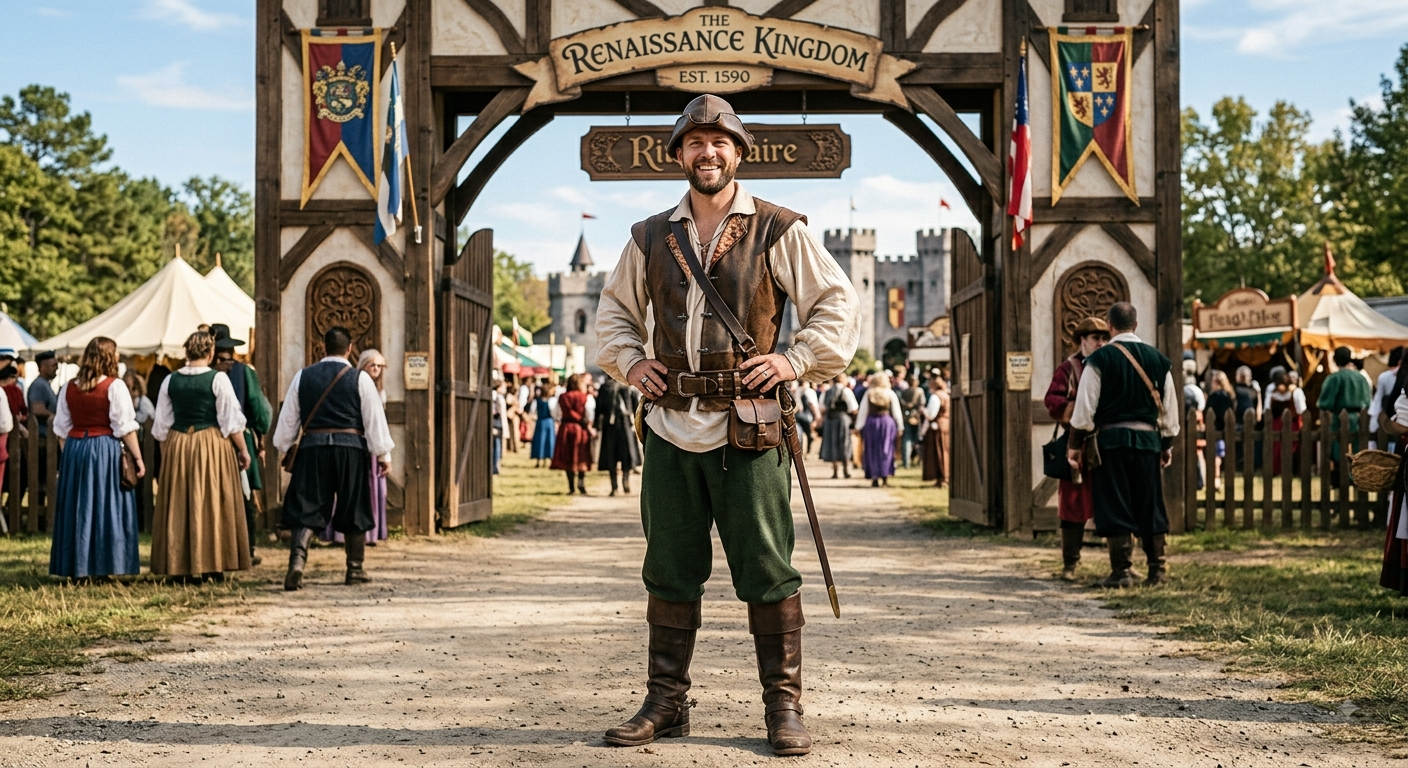
Why Your Outfit Strategy Matters
Ren faires run long, often six to eight hours on your feet, frequently in warm weather, on uneven grass or dirt paths. The outfits that photograph best in a mirror aren’t always the ones that survive a full day of walking, eating turkey legs, and cheering on a joust. A smart approach balances three things: period-appropriate style, comfort, and durability. Get those three right and everything else — the swagger, the character, the compliments from strangers in period costume — follows naturally.
Start With the Base Layer: Shirt and Pants
The Shirt
Almost every classic men’s ren faire look starts with a loose-fitting shirt, often called a peasant shirt or chemise. Look for cotton or linen with full sleeves, a laced or buttoned collar, and enough room to move freely. Avoid anything fitted or overly structured — the whole point of the silhouette is volume you can layer over.
If you don’t want to buy something new, a plain white or cream button-down from your closet, worn slightly oversized with the sleeves rolled or the top few buttons open, gets you most of the way there.
The Pants
Baggy pants, sometimes called pirate pants or Renaissance trousers, are the backbone of the look. They should sit high on the waist, taper or gather at the ankle, and have enough fabric to move naturally with each step. Dark, earthy colors — brown, black, forest green, deep burgundy — read as period-appropriate and hide dust and grass stains far better than lighter fabrics.
Don’t own a pair of period trousers? Loose linen pants, joggers in a solid earth tone, or even wide-leg khakis tucked into boots can work in a pinch.
Build the Middle Layer: Vest, Doublet, or Jerkin
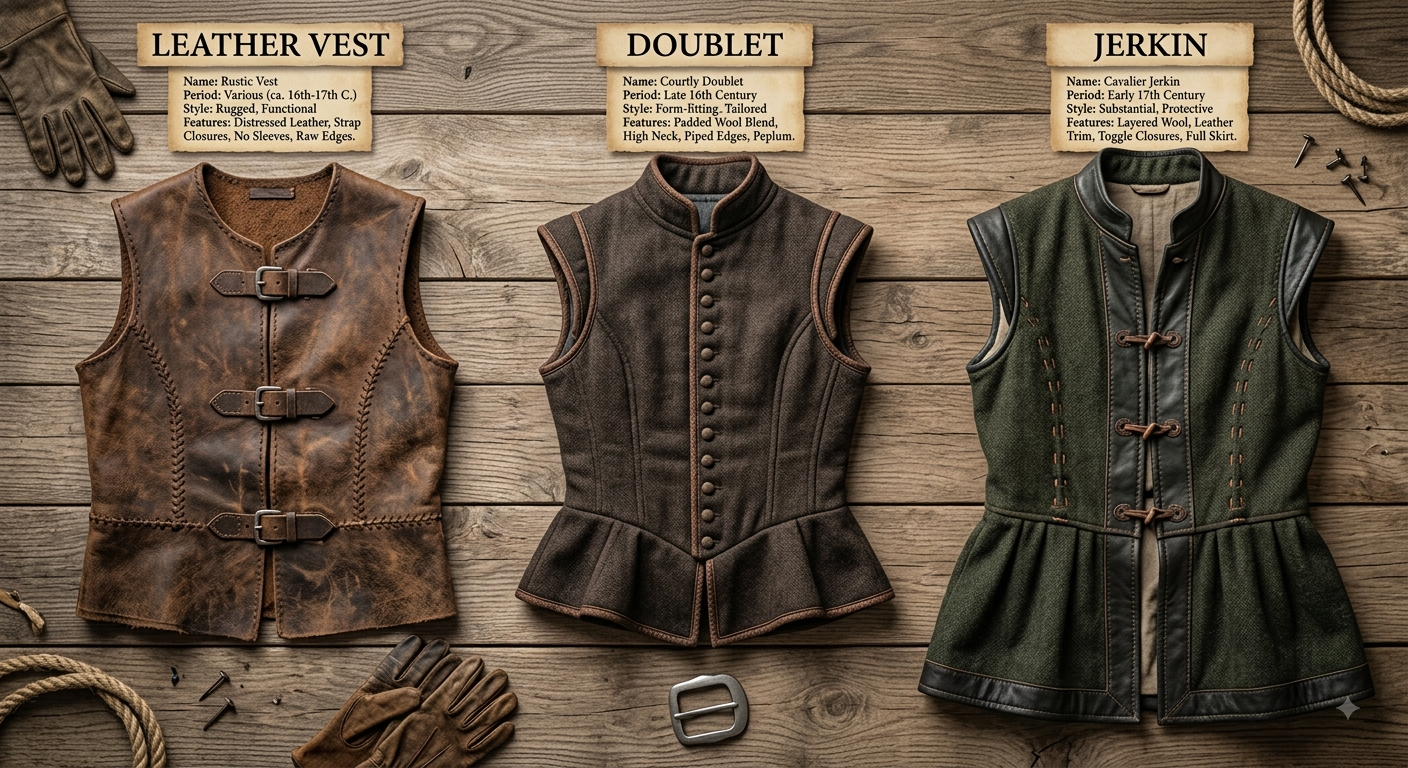
Once your base layer is set, it’s time to add structure. This is the step that instantly separates “guy in a baggy shirt” from “guy who clearly put thought into this.” A vest, doublet, or jerkin adds shape at the shoulders and waist and gives the whole outfit a finished silhouette.
Vest
A simple lace-up or button-front vest in leather, suede, or heavy cotton is the most versatile option. It works over a plain shirt, layers well under a cloak, and comes in enough styles — knight, rogue, tavern keeper, merchant — that you can pick one to match whatever character energy you’re going for.
Doublet or Jerkin
For a more tailored, historically-inspired look, a doublet or jerkin (a fitted, sleeveless or short-sleeved jacket) sits closer to the body and often includes decorative stitching, buttons, or lacing. These tend to run a bit warmer and more structured than a vest, so they’re best for cooler weather or shorter faire days.
Layer It Up: Cloaks, Capes, and Overcoats
If there’s one accessory that adds the most visual impact for the least effort, it’s a cloak. A floor-length or knee-length cloak in wool, cotton-blend, or faux suede instantly reads as period costume, works over almost any outfit underneath, and doubles as a layer you can remove if the day heats up.
Capes and long coats work the same way for a different aesthetic — a longer wool coat leans more pirate captain or traveling merchant, while a shorter cape feels more squire or ranger. Either way, this is the piece that turns heads from across the faire grounds, so it’s worth investing a little more here even if you keep the rest of the outfit simple.
The Belt: More Functional Than You’d Think
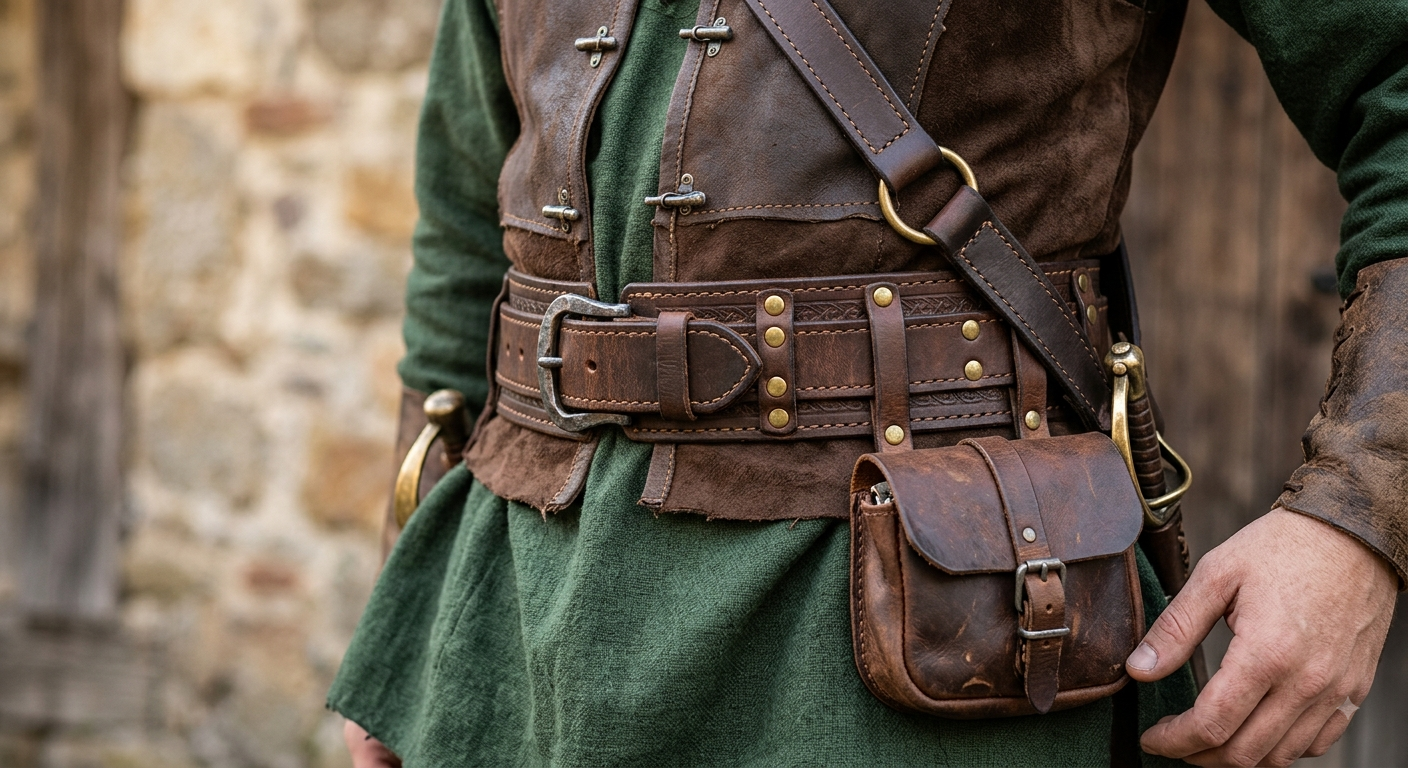
A sturdy leather belt does double duty in a ren faire outfit. Practically, it cinches your layers together and gives you somewhere to hang a pouch, a tankard clip, or a prop sword if your faire allows it. Visually, it defines your waist and breaks up what would otherwise be a shapeless block of fabric from shoulders to ankles.
Wide leather belts, double-wrap belts, or belts with a baldric (a diagonal strap crossing the chest, often used to hold a sword or horn) all work well. Position matters too — worn at natural waist height it looks tidy and put-together; worn low on the hips it reads more rugged and adventurer-coded.
Footwear: Comfort Is Non-Negotiable
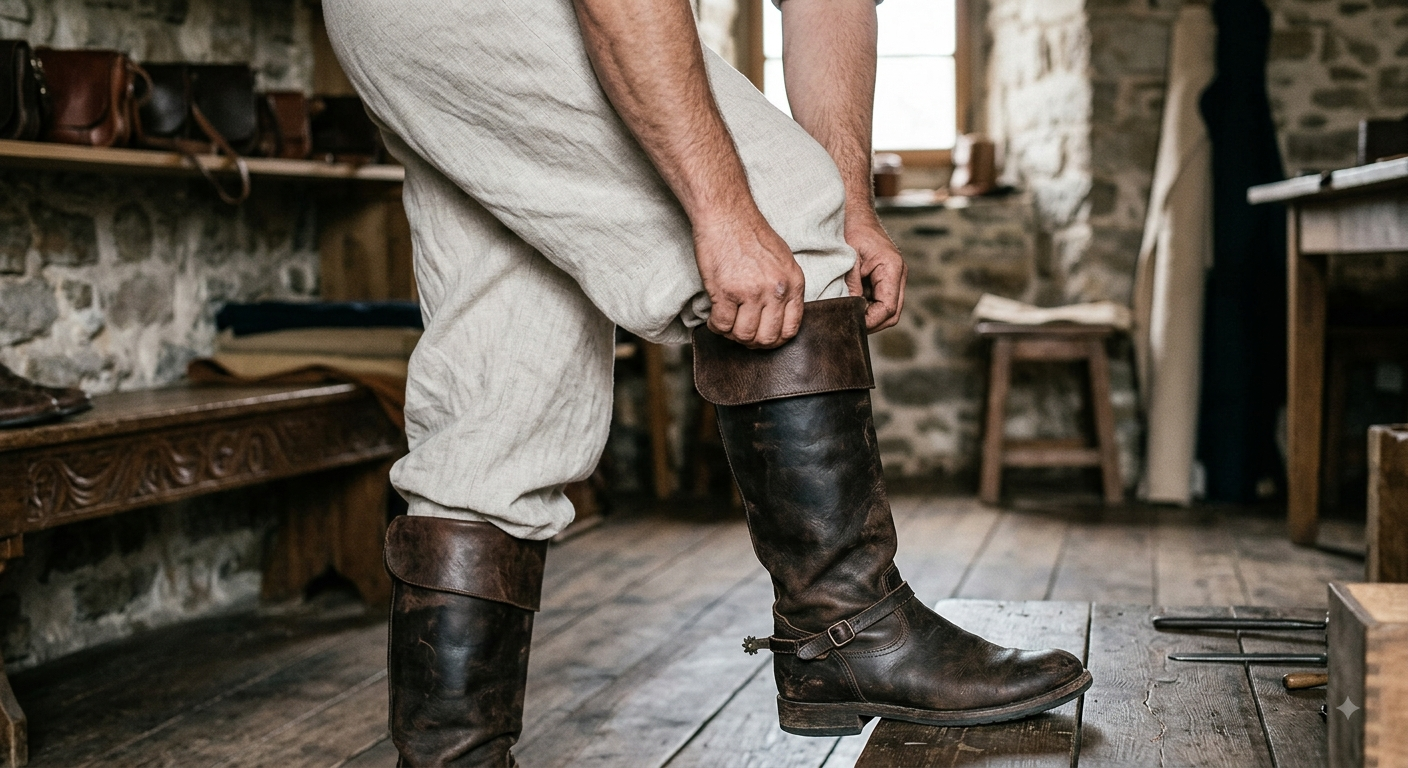
This is the category where new faire-goers most often go wrong. Historically-styled boots look fantastic in photos, but if they’re not broken in, you will regret them by hour three. Prioritize:
- Ankle or knee-high boots in brown or black leather (real or faux)
- A low, sturdy heel rather than anything with a slick or narrow sole
- Room to walk on grass and dirt without sliding
If you don’t have period boots, dark leather work boots or hiking boots with the pant leg tucked over the top can pass at a glance and will keep your feet happy for the whole day.
Accessories That Finish the Look
A handful of small accessories go a long way toward making an outfit feel complete rather than thrown together:
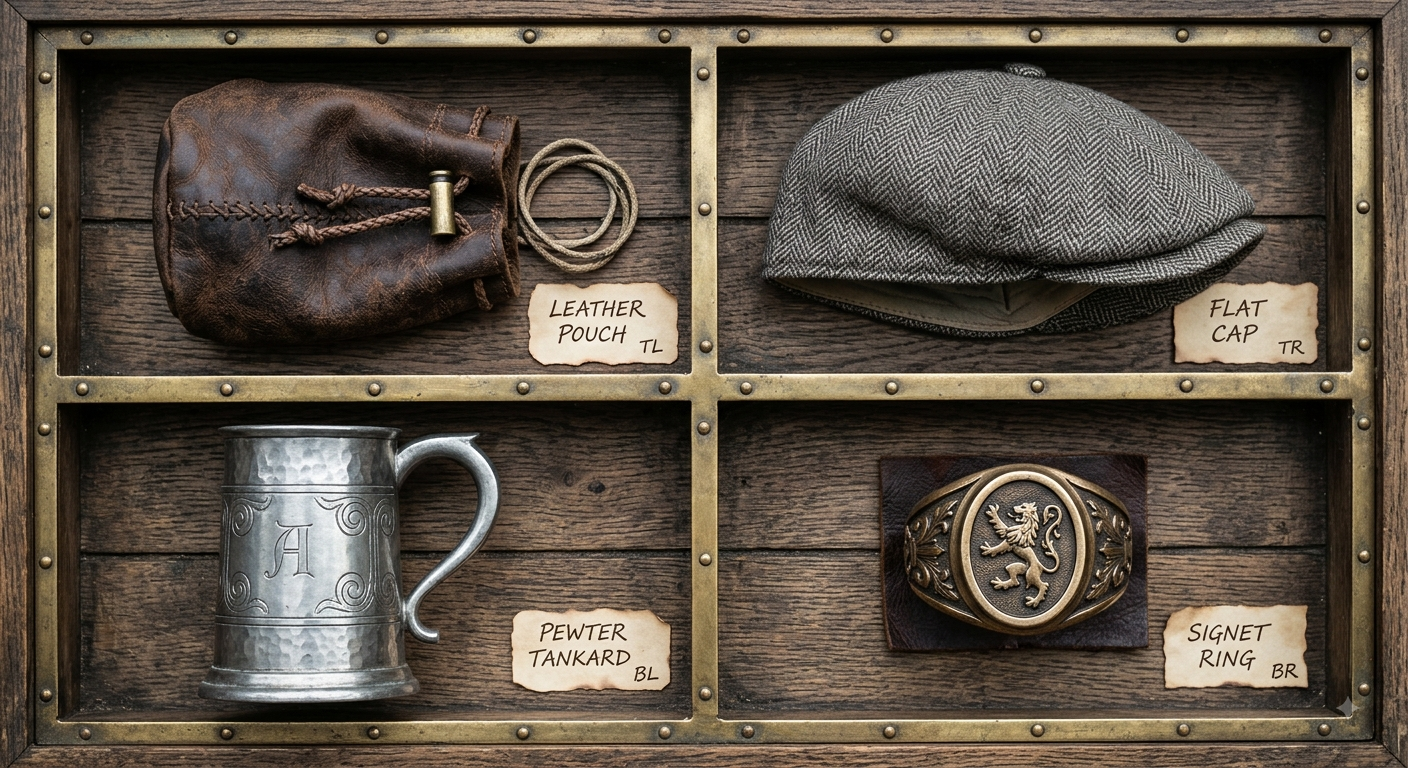
- A wide-brimmed hat, hood, or flat cap — practical for sun and shade, and instantly period-appropriate
- A pouch or satchel for your phone, wallet, and sunscreen, worn on the belt or across the body
- Simple jewelry like a leather cord necklace, a signet-style ring, or a small pendant
- A prop — a wooden tankard, a fan, or (faire rules permitting) a costume sword or dagger
Avoid overloading with too many accessories at once. Two or three well-chosen pieces read as intentional; six or seven start to look cluttered.
Choosing a Character or Theme
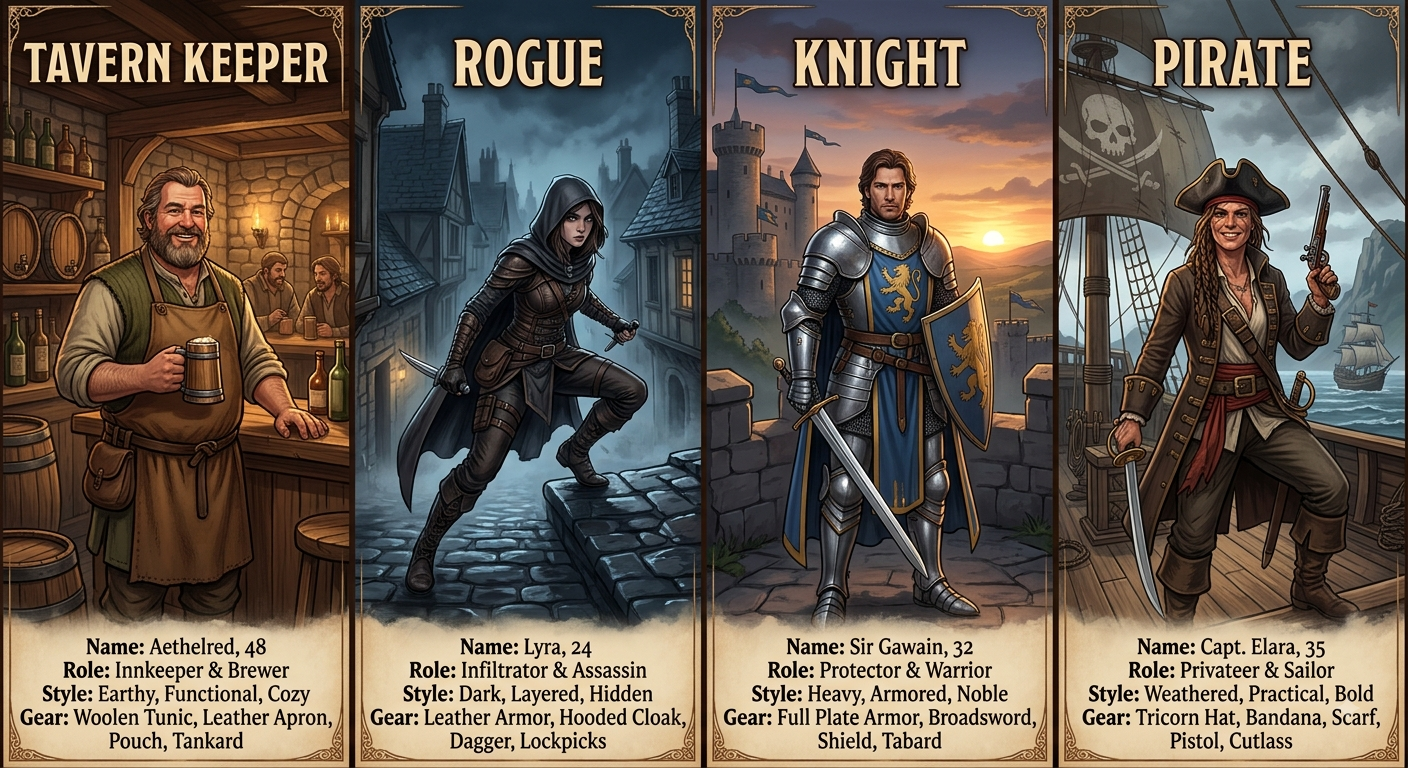
Many ren faire regulars find it easier to build an outfit once they’ve picked a loose character concept rather than just “medieval guy.” A few reliable directions:
The Tavern Keeper or Peasant
Simple linen shirt, vest, plain trousers, and a worn leather apron. Comfortable, easy to build from thrifted pieces, and forgiving in the heat.
The Rogue or Ranger
Darker colors, a hood, layered leather accents, and a bow or dagger prop if allowed. Great for faires with archery demonstrations.
The Knight or Squire
Chainmail-look accents, a tabard, a wider belt, and boots. Heavier and warmer, best suited to cooler weather or shorter faire visits.
The Pirate
Loose linen shirt, a longer coat, a tricorn hat, and boots. This crossover style has become a faire staple even though it’s technically a few centuries off from the Renaissance period, and most faires embrace it happily.
Budget Tips: Building an Outfit Without Overspending
You don’t need to buy a full costume set to look the part. A few practical strategies:
- Thrift the base layer. Oversized button-downs, linen pants, and leather belts are common secondhand finds.
- Invest in one statement piece. A good cloak or vest does more visual work than five smaller accessories combined.
- Reuse Halloween pieces. Pirate or medieval costume elements from past Halloweens often blend seamlessly into a faire outfit.
- Buy boots you’ll actually wear again. Dark leather boots pay for themselves outside faire season too.
- Ask your local faire’s Facebook group. Regulars frequently sell or swap gently used pieces after the season ends.
Final Thoughts
A great men’s ren faire outfit isn’t about historical perfection — it’s about comfort, layering, and a few well-chosen pieces that let you move through the day feeling like part of the world instead of a visitor in a costume. Start with a loose shirt and comfortable pants, add structure with a vest or doublet, throw a cloak over the top, cinch it with a belt, and finish with boots you can actually walk in. Everything else — the hat, the pouch, the prop sword — is where you get to have fun and make the look your own.
Whether this is your first faire or your fifteenth, the outfit that works best is the one that lets you forget you’re wearing a costume at all.